Viajá por el mundo a través de los libros hasta 55% dto + 3 cuotas sin interés  Ver más

Enviar a
C.A.B.A., Ciudad Autónoma de Buenos Aires
0
  • argentina
  • chile
  • colombia
  • españa
  • méxico
  • perú
  • estados unidos
  • internacional

Selecciona tu país

América

Europa

Resto del mundo

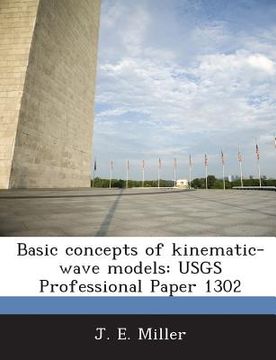
portada Basic Concepts of Kinematic-Wave Models: Usgs Professional Paper 1302 (en Inglés)
Formato
Libro Físico
Editorial
Idioma
Inglés
N° páginas
40
Encuadernación
Tapa Blanda
Dimensiones
24.6x18.9x0.2 cm
Peso
0.09 kg.
ISBN13
9781287011569

Basic Concepts of Kinematic-Wave Models: Usgs Professional Paper 1302 (en Inglés)

J. E. Miller (Autor) · Bibliogov · Tapa Blanda

Basic Concepts of Kinematic-Wave Models: Usgs Professional Paper 1302 (en Inglés) - Miller, J. E.

Libro Nuevo Importado
Envío: 18 a 24 días háb.
$ 117.150$ 52.717
-55%
Costos de importación incluídos en el precio ✅
Libro Nuevo

Quedan 100 unidades

$ 52.717
Llega entre el 29 Oct y el 06 Nov a C.A.B.A., Ciudad Autónoma de Buenos Aires. Seleccionar ubicación

Reseña del libro "Basic Concepts of Kinematic-Wave Models: Usgs Professional Paper 1302 (en Inglés)"

The kinematic-wave model is one of a number of approximations of the dynamic-wave model. The dynamic-wave model describes one-dimensional shallow-water waves (unsteady, gradually varied, open-channel flow). The report provides a basic reference on the theory and application of kinematic-wave models and describes the limitations of the model in relation to the other approximations of the dynamic-wave model. In the kinematic-wave approximation, a number of the terms in the equation of motion are assumed to be insignificant. The equation of motion is replaced by an equation describing uniform flow. Thus, the kinematic-wave model is described by the continuity equation and a uniform flow equation such as the well-known Chezy or Manning formulas. Kinematic-wave models are applicable to overland flow where lateral inflow is continuously added and is a large part of the total flow. For channel-routing applications, the kinematic-wave model always predicts a steeper wave with less dispersion and attenuation than actually occurs. The effect of the accumulation of errors in the kinematic-wave model shows that the approximations made in the development of the kinematic-wave equations are not generally justified for most channel-routing applications. Modified flow-routing models can be used which help to stop the accumulation of error that occurs when the kinematic-wave model is applied.

Opiniones del libro

Preguntas frecuentes sobre el libro

Todos los libros de nuestro catálogo son Originales.
El libro está escrito en Inglés.
La encuadernación de esta edición es Tapa Blanda.

Preguntas y respuestas sobre el libro

¿Tienes una pregunta sobre el libro? Inicia sesión para poder agregar tu propia pregunta.

Opiniones sobre Buscalibre

Ver más opiniones de clientes