Magia en cada página | Especial Harry Potter hasta 55% OFF  Ver más

Enviar a
C.A.B.A., Ciudad Autónoma de Buenos Aires
0
  • argentina
  • chile
  • colombia
  • españa
  • méxico
  • perú
  • estados unidos
  • internacional

Selecciona tu país

América

Europa

Resto del mundo

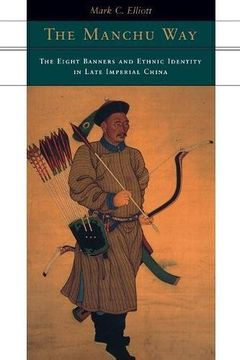
portada The Manchu Way: The Eight Banners and Ethnic Identity in Late Imperial China (en Inglés)
Formato
Libro Físico
Año
2001
Idioma
Inglés
N° páginas
608
Encuadernación
Tapa Blanda
Dimensiones
23.4 x 16.1 x 3.3 cm
Peso
0.84 kg.
ISBN
0804746842
ISBN13
9780804746847
N° edición
1
Categorías

The Manchu Way: The Eight Banners and Ethnic Identity in Late Imperial China (en Inglés)

Mark C. Elliott (Autor) · Stanford University Press · Tapa Blanda

The Manchu Way: The Eight Banners and Ethnic Identity in Late Imperial China (en Inglés) - Elliott, Mark C.

Libro Nuevo Importado
Envío: 24 a 29 días háb.
$ 151.813$ 68.316
-55%
Costos de importación incluídos en el precio ✅
Libro Nuevo

Quedan 7 unidades

$ 68.316
Llega entre el 02 Sep y el 09 Sep a C.A.B.A., Ciudad Autónoma de Buenos Aires. Seleccionar ubicación

Reseña del libro "The Manchu Way: The Eight Banners and Ethnic Identity in Late Imperial China (en Inglés)"

In 1644, the Manchus, a relatively unknown people inhabiting China's rude northeastern frontier, overthrew the Ming, Asia's mightiest rulers, and established the Qing dynasty, which endured to 1912. From this event arises one of Chinese history's great conundrums: How did a barely literate alien people manage to remain in power for nearly 300 years over a highly cultured population that was vastly superior in number? This problem has fascinated scholars for almost a century, but until now no one has approached the question from the Manchu point of view. This book, the first in any language to be based mainly on Manchu documents, supplies a radically new perspective on the formative period of the modern Chinese nation. Drawing on recent critical notions of ethnicity, the author explores the evolution of the "Eight Banners," a unique Manchu system of social and military organization that was instrumental in the conquest of the Ming. The author argues that as rulers of China the Manchu conquerors had to behave like Confucian monarchs, but that as a non-Han minority they faced other, more complex considerations as well. Their power derived not only from the acceptance of orthodox Chinese notions of legitimacy, but also, the author suggests, from Manchu "ethnic sovereignty," which depended on the sustained coherence of the conquerors. When, in the early 1700s, this coherence was threatened by rapid acculturation and the prospective loss of Manchu distinctiveness, the Qing court, always insecure, desperately urged its minions to uphold the traditions of an idealized "Manchu Way." However, the author shows that it was not this appeal but rather the articulation of a broader identity grounded in the realities of Eight Banner life that succeeded in preserving Manchu ethnicity, and the Qing dynasty along with it, into the twentieth century.

Opiniones del libro

Preguntas frecuentes sobre el libro

Todos los libros de nuestro catálogo son Originales.
El libro está escrito en Inglés.
La encuadernación de esta edición es Tapa Blanda.

Preguntas y respuestas sobre el libro

¿Tienes una pregunta sobre el libro? Inicia sesión para poder agregar tu propia pregunta.

Opiniones sobre Buscalibre

Ver más opiniones de clientes